
Protection and care
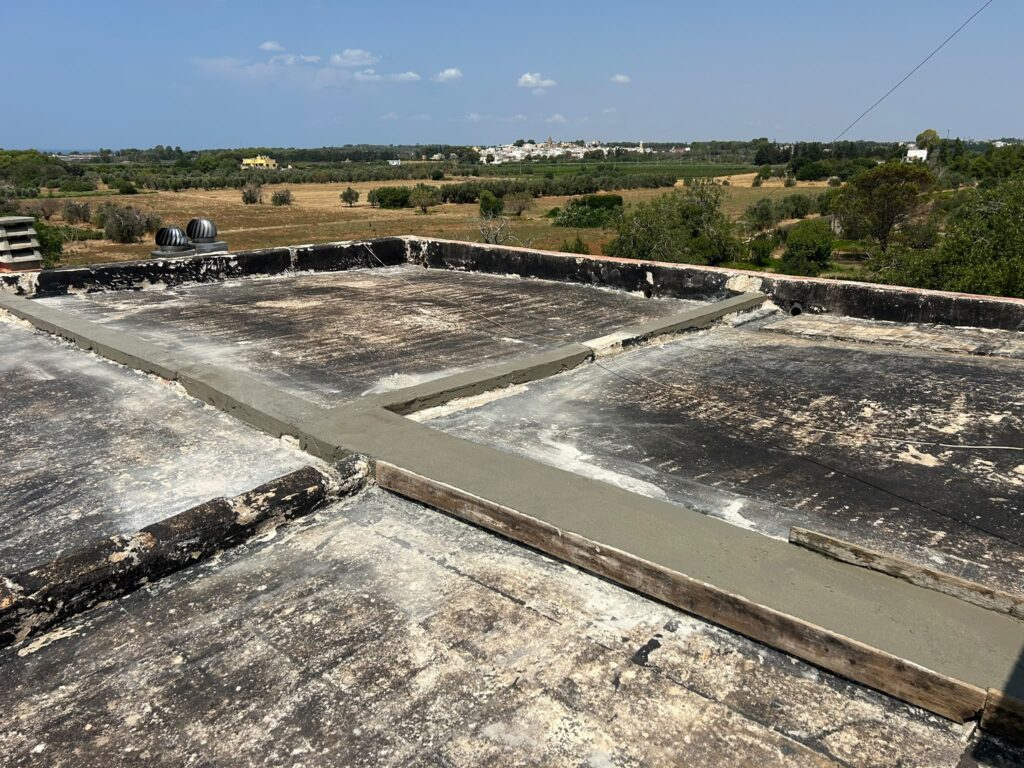
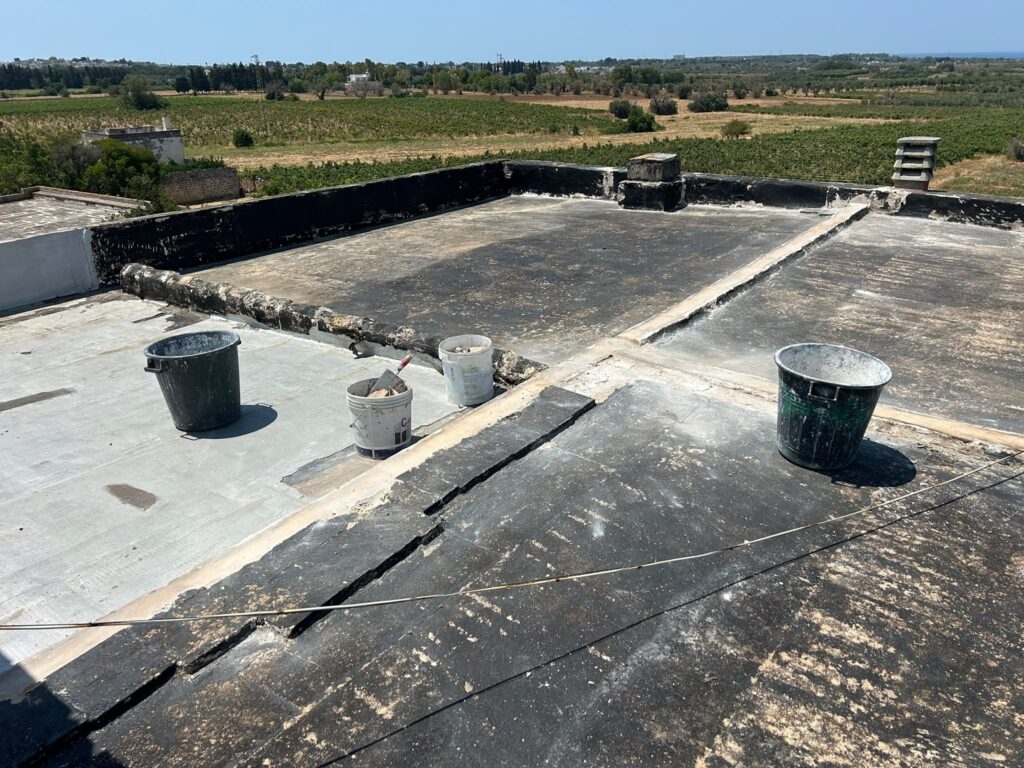
A project designed to protect and preserve the structure of this distinctive farmhouse in the Salento countryside over time.
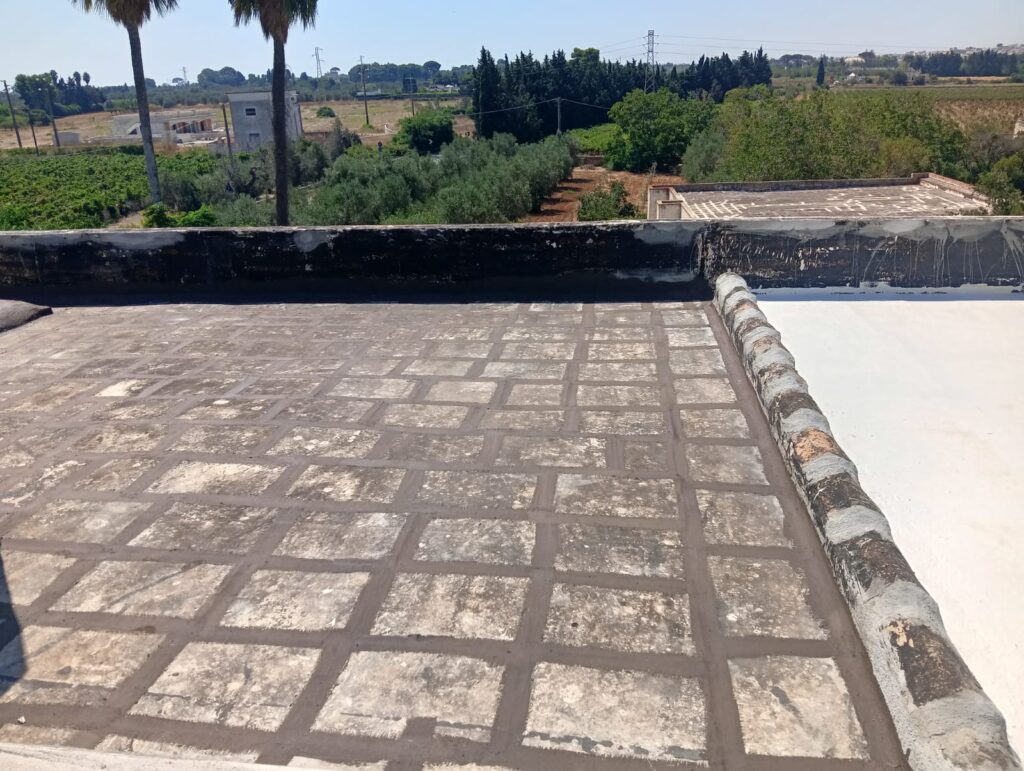
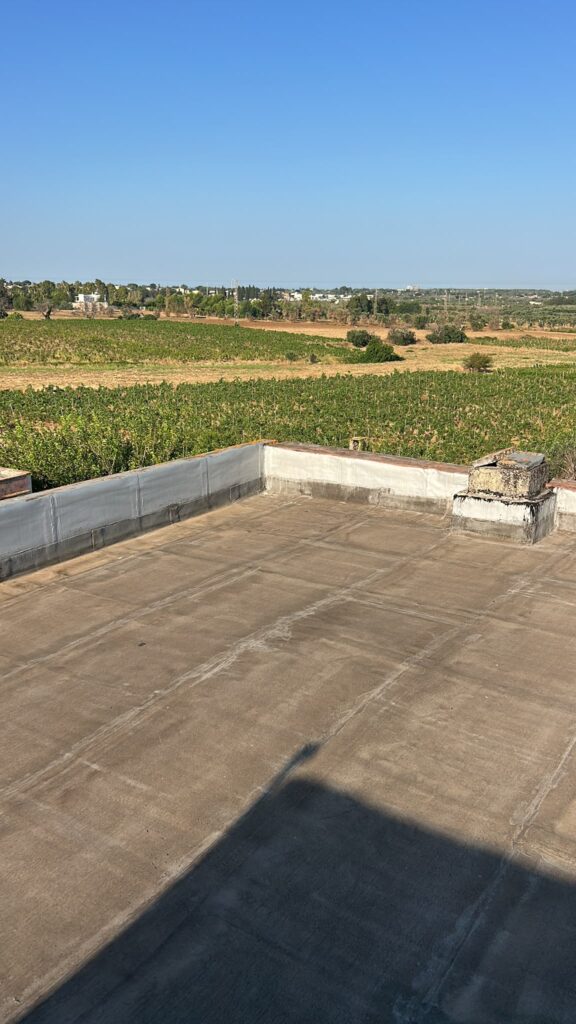
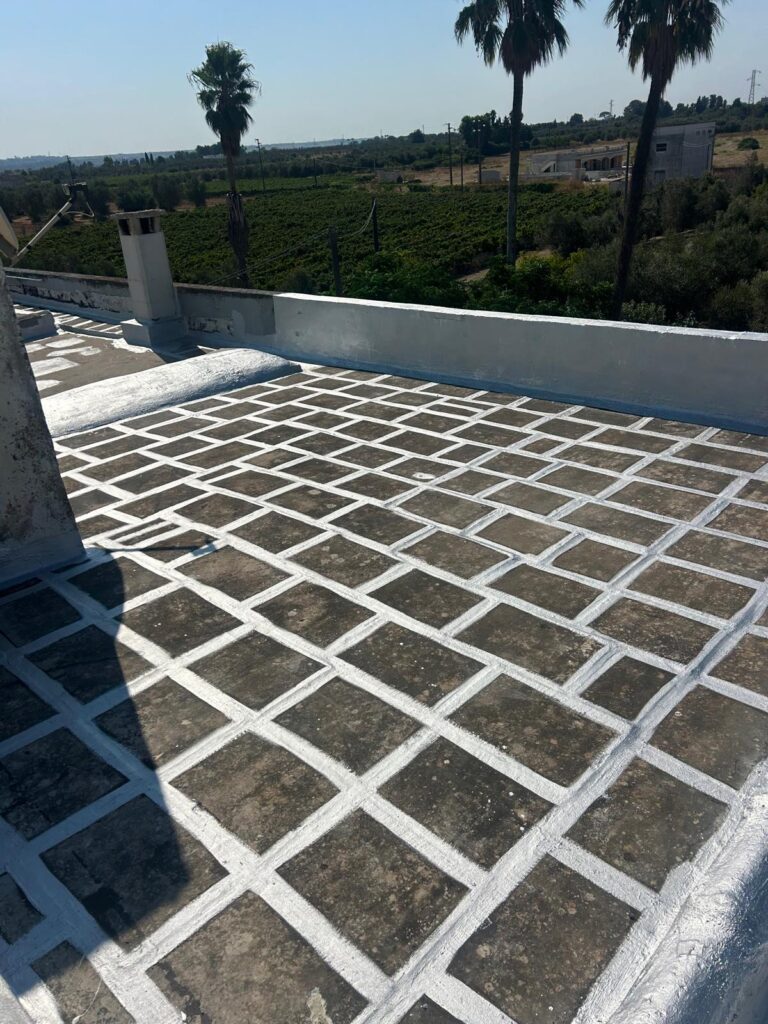
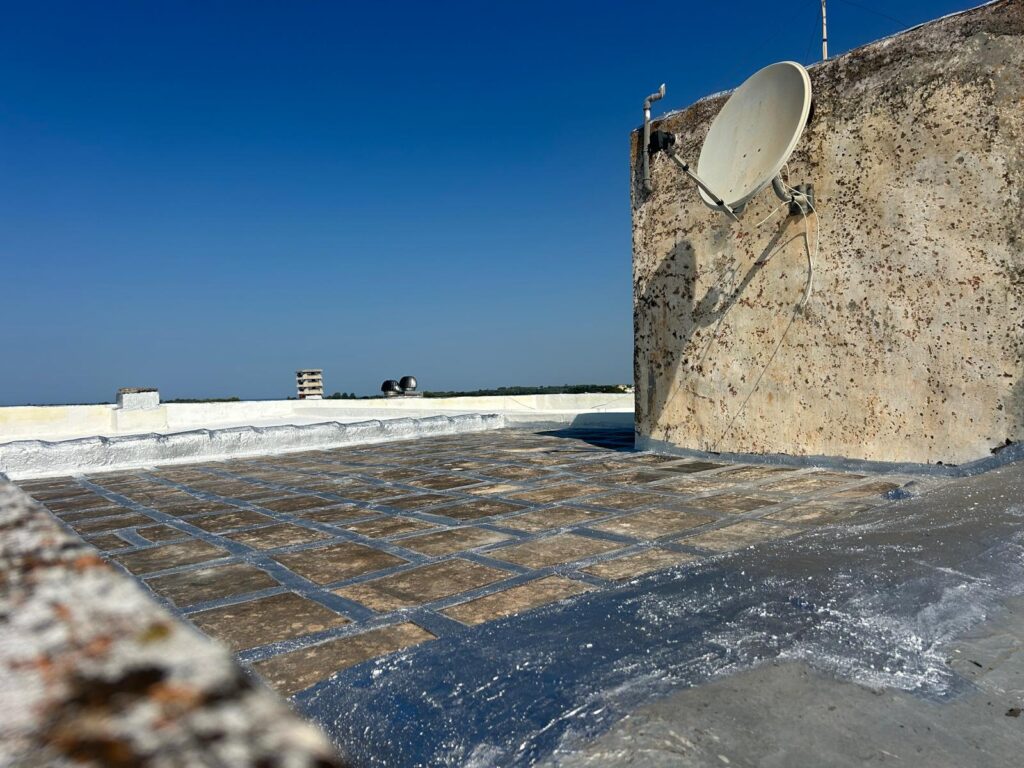
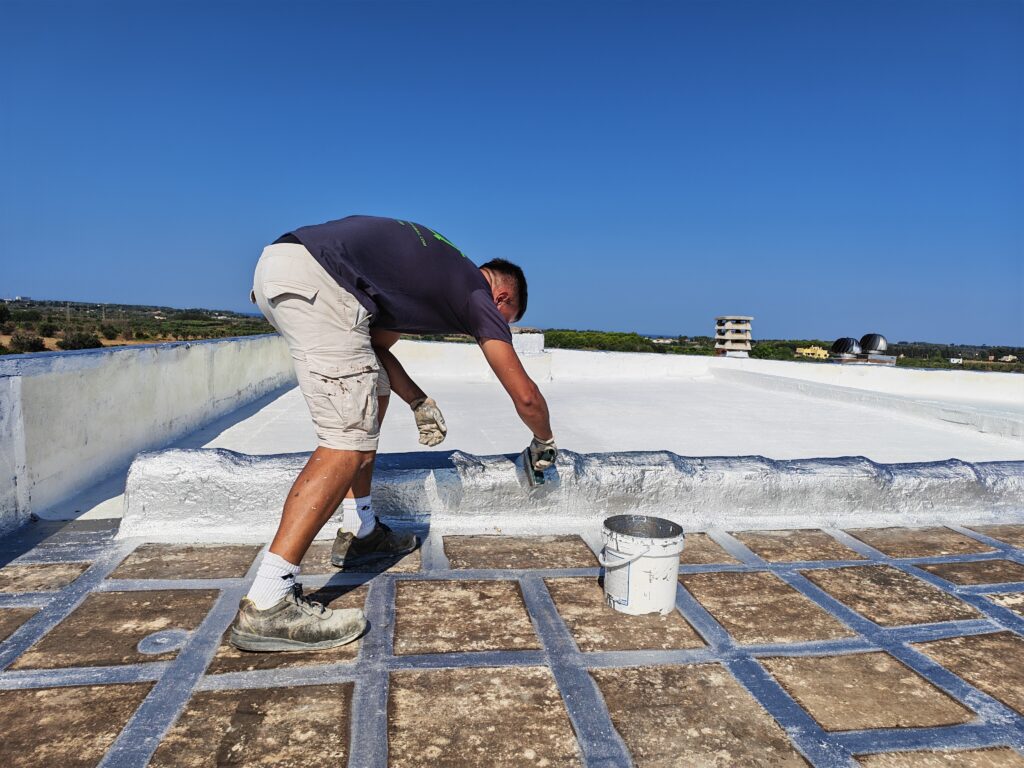
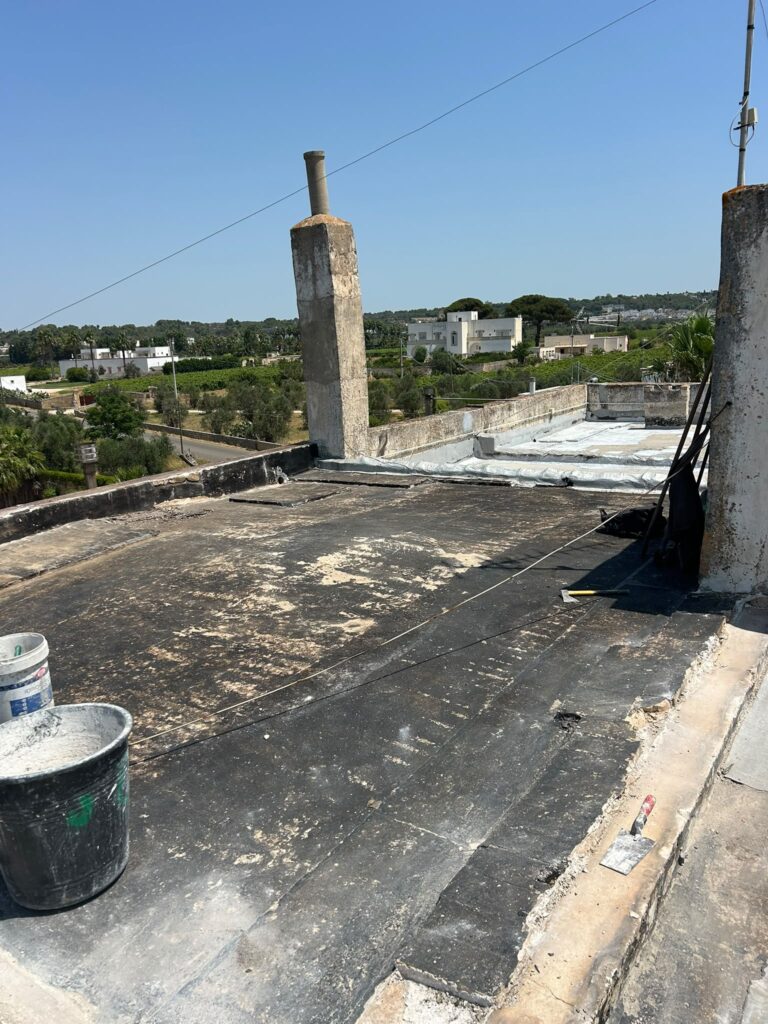
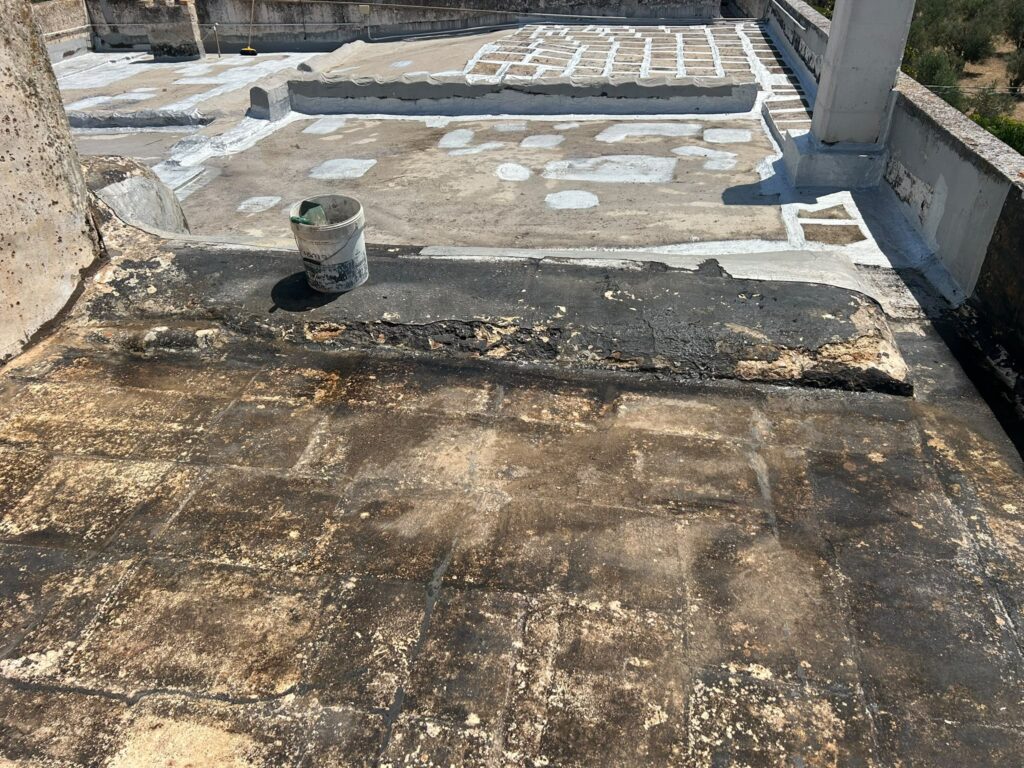
🔹Waterproofing carried out partly using a bituminous product.
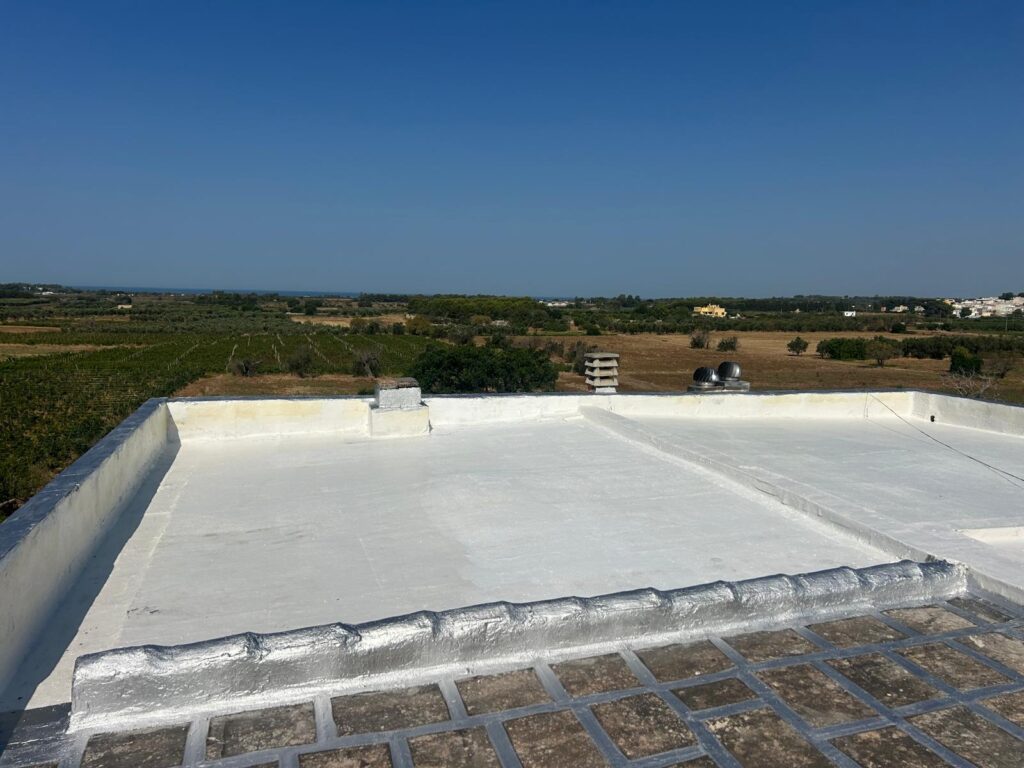
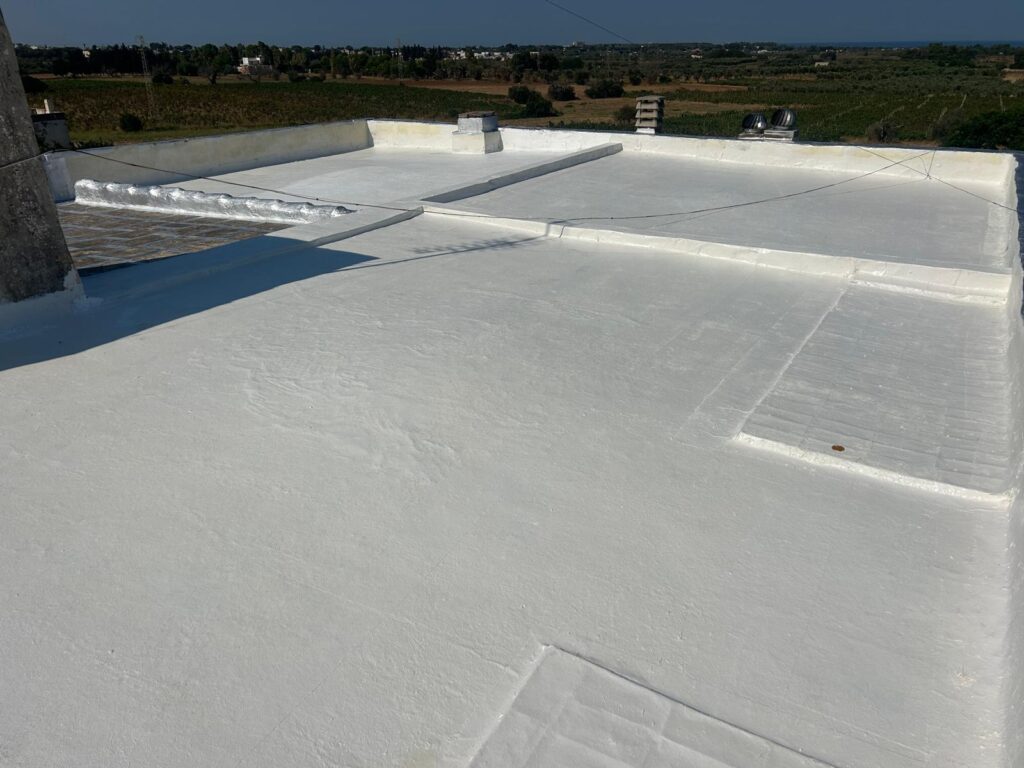
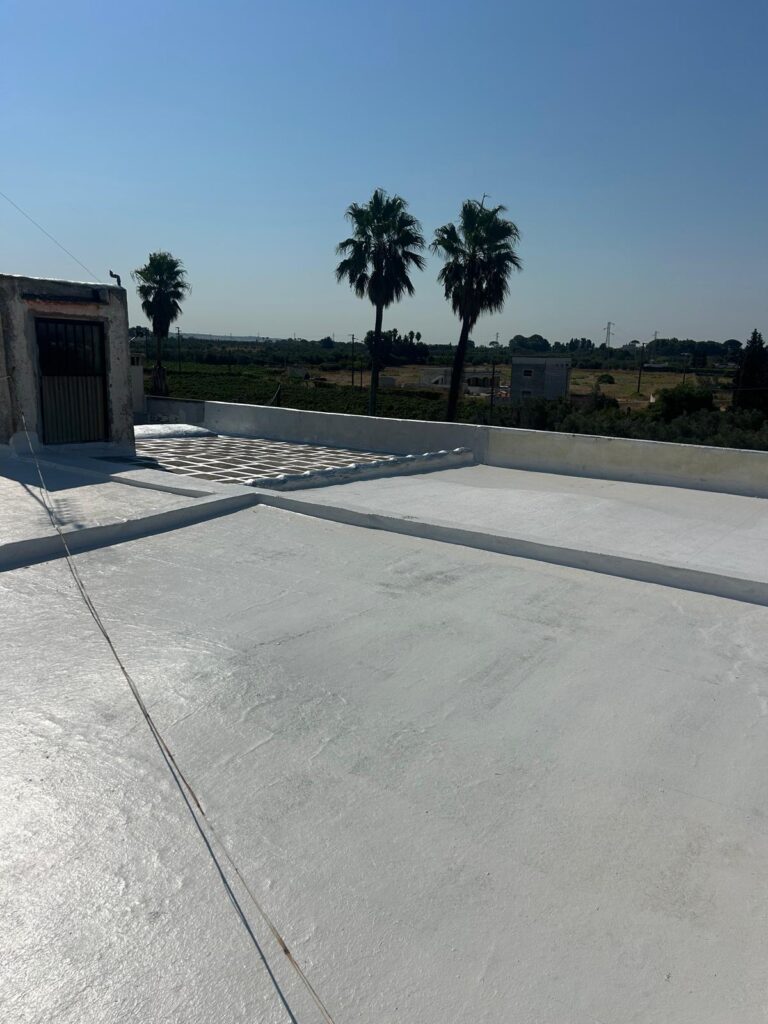
🔹A large part of the surface treated with a polyurethane system.
🔹Specific solutions to ensure watertightness, resistance, and durability.
Every surface has its own requirements: choosing the most suitable product and application system ensures an effective, long-lasting result.
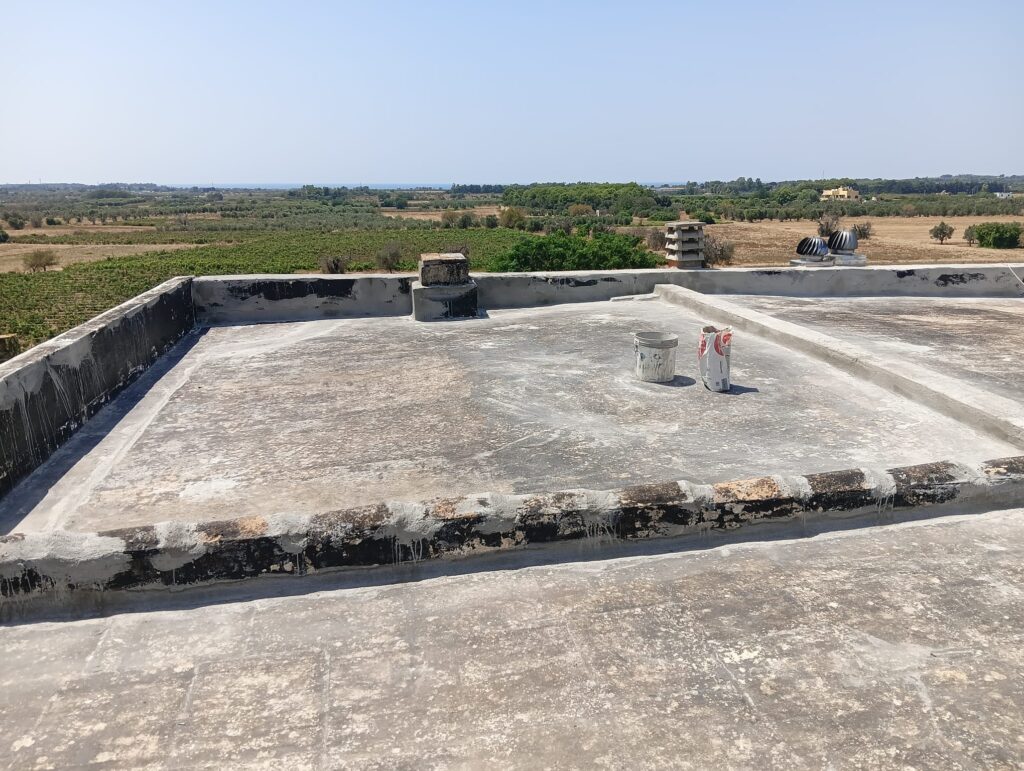
Why bituminous material is used
The bituminous product is primarily used to create a highly water-resistant waterproof barrier.
The main advantages are:
- excellent water and moisture resistance;
- good adhesion to various substrates;
- ability to accommodate, within certain limits, minor movements of the substrate;
- high durability;
- It can be particularly useful in the most problematic areas or at junctions.
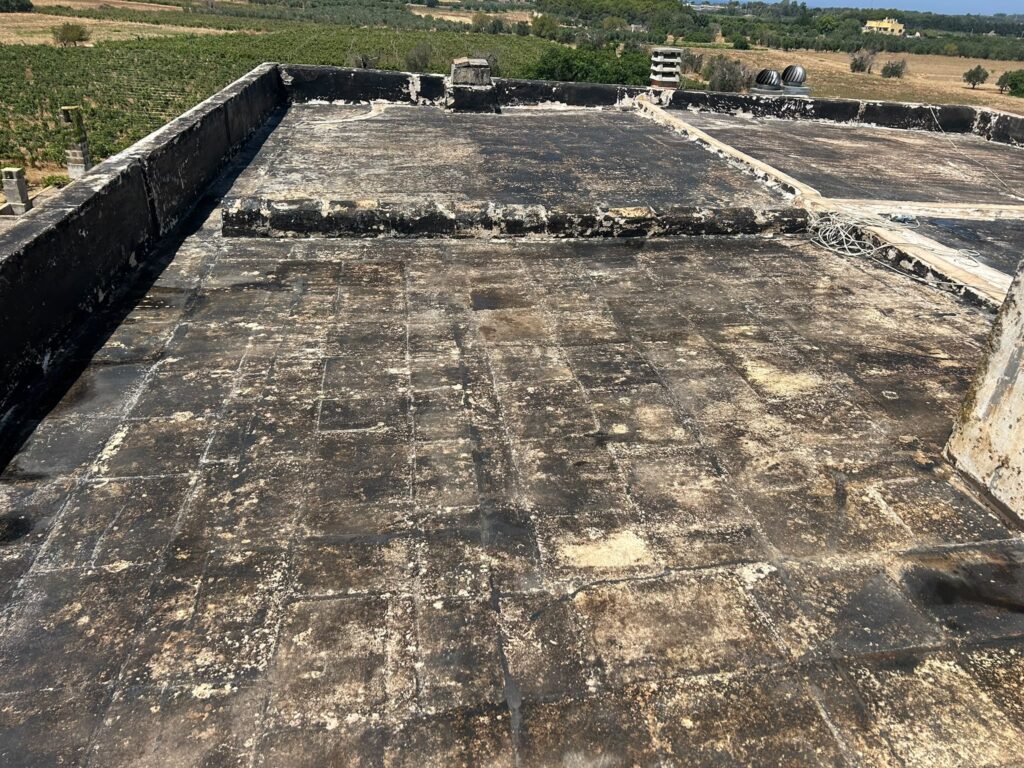
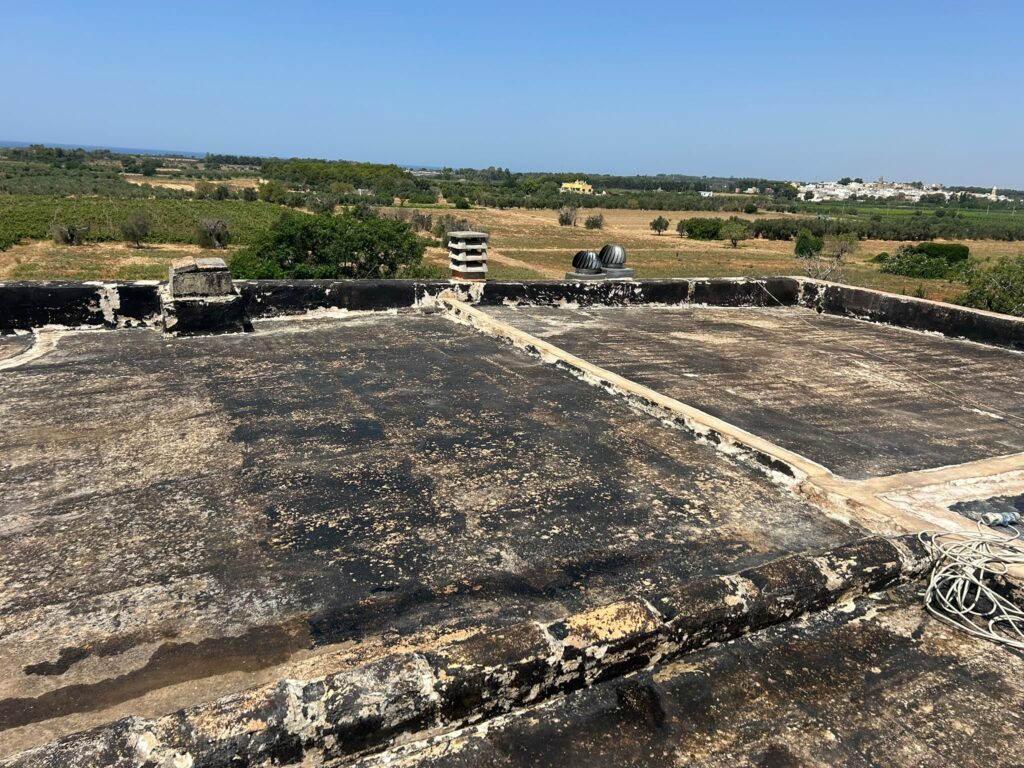
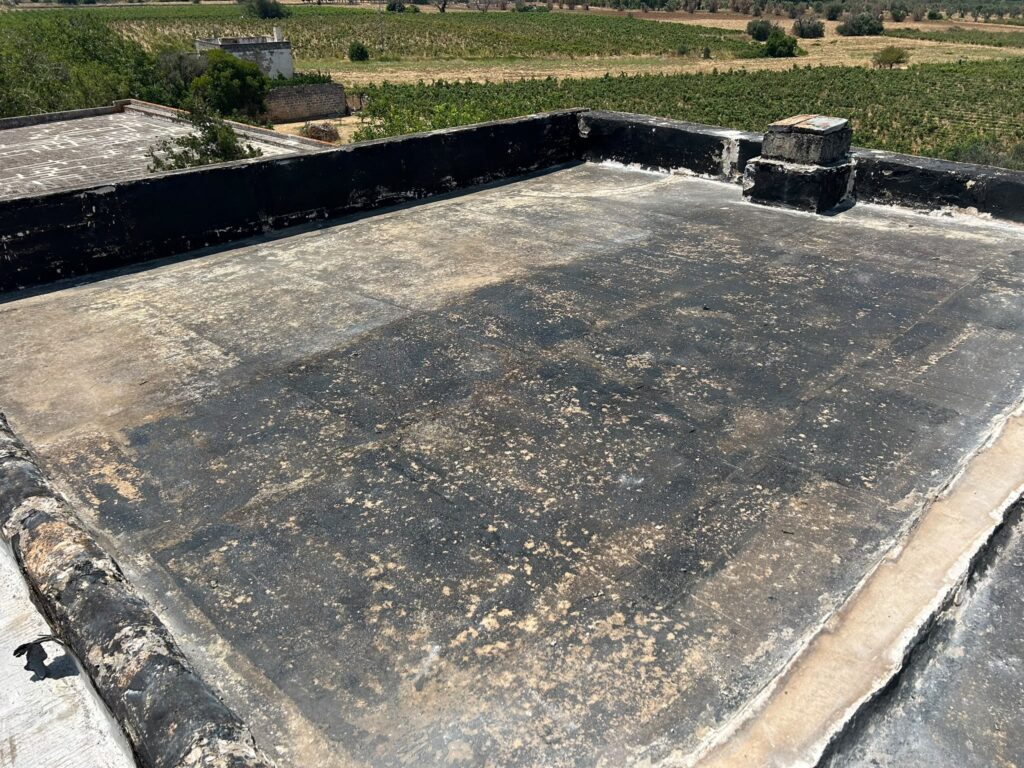
In the case of an existing terrace, it can therefore be used to treat the base and/or critical points, such as connections, joints, upturns, and areas most exposed to water infiltration.
Why polyurethane?
Polyurethane waterproofing is often used to create a continuous membrane, without the overlaps typical of roofing felts or sheets.
Once applied, it forms an elastic film that:
- prevents water from penetrating;
- it follows the expansions and slight movements of the support;
- it allows for the treatment of even fairly complex surfaces;
- It enables continuous waterproofing to be achieved, even around many construction details.
It is particularly suitable for terraces because it can create a uniform surface, provided that the substrate, primer, thicknesses, and application conditions are correct.